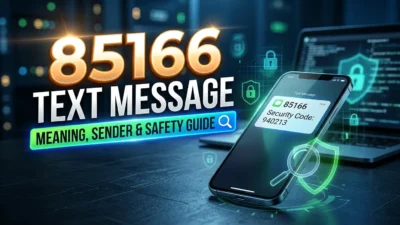
Receiving a text from an unfamiliar number can leave you wondering who sent it and why it appeared on your phone. If you have received a 66867 text message, you may be trying to identify the sender, understand its purpose, or decide whether it is safe to respond.
Short codes are often used by businesses and organizations to send automated notifications, verification codes, account alerts, and promotional messages. However, the number displayed on your screen does not automatically prove that a message is genuine. Its meaning depends on the message itself and the service associated with it.
This guide explains what to check when you receive a message from 66867, how to recognize warning signs, and what steps to take before clicking a link or sharing personal information. You will also learn how to handle unwanted messages and protect your phone and online accounts.
The goal is simple: help you understand the message without jumping to conclusions or putting your privacy at risk.
What Is a 66867 Text Message? 📱
A 66867 text message is a message that appears to come from the short code 66867 rather than a conventional phone number. Short codes are commonly used for automated communication, although the exact sender and purpose must be verified.
The number alone is not enough to identify the organization behind the message. Look at the wording, any service mentioned, and whether you recently requested a notification or verification code.
- Account notification: The message may claim to provide information about an account or service.
- Verification message: Some services use text messages to deliver one-time security codes.
- Promotional text: Businesses sometimes send marketing messages to customers who have subscribed.
- Unexpected alert: A message may mention an unfamiliar transaction, account change, or subscription.
- Suspicious communication: A text could attempt to make you click a link, reveal private information, or contact an unverified number.
These are general possibilities, not confirmed uses of 66867. Without reliable information identifying the sender, it would be inaccurate to assign this short code to a specific company.
Why Did You Receive a 66867 Text Message? 🔍
The reason for receiving the message depends on its content and your recent activity. Before responding, consider whether you recently used an online service, signed up for a promotion, or requested an authentication code.
Here are some possible explanations to investigate.
- You recently signed up for a service. A business may send a confirmation or welcome message after registration.
- You requested a verification code. If you attempted to sign in or reset a password, the text could be related to that request.
- You subscribed to updates. A service may send notifications after you agree to receive them.
- Someone entered your number by mistake. An incorrect phone number during registration can result in unexpected messages.
- Someone may be attempting to access your account. An unsolicited verification code can indicate that another person entered your number during a login or recovery attempt.
- The message may be unwanted or fraudulent. Unexpected links, urgent demands, and requests for sensitive details deserve extra caution.
Do not assume that receiving the text means your phone has been hacked. First, examine the message and verify any claimed activity through the official website or application of the service involved.
Is a 66867 Text Message Legitimate or a Scam? ⚠️
A message from a short code is not automatically safe or fraudulent. Its legitimacy depends on the sender, the purpose of the message, and whether its claims can be independently verified.
Use the following warning signs to assess the message before taking action.
- Unexpected links: Be cautious when a message asks you to open an unfamiliar website, especially to fix an urgent account problem.
- Requests for passwords: Legitimate support teams should not ask you to send your password through a text message.
- One-time code requests: Never share a verification code with someone who contacts you unexpectedly.
- Pressure to act immediately: Threats about account closure, penalties, or lost access can be used to rush people into making mistakes.
- Unfamiliar payment requests: Verify any demand for money through the service’s official channels.
- Unclear sender identity: A message that does not identify its organization or explain its purpose deserves further checking.
- Unexpected personal information requests: Do not provide banking details, identity information, or account credentials simply because a text asks for them.
A professional tone or familiar-looking logo does not prove authenticity. If the text claims to come from a company you recognize, open that company’s official app or type its verified website address into your browser instead of following the message’s link.
What Should You Do After Receiving a 66867 Text Message? 🛡️
The safest response is to pause and verify the message before interacting with it. You do not need to reply immediately, even if the text suggests that something important has happened.
Follow these practical steps:
- Read the entire message carefully. Check whether it names a service, explains why it contacted you, or includes a request that seems unusual.
- Think about your recent activity. Consider whether you actually registered, signed in, or requested a code from the service mentioned.
- Verify the sender independently. Use the official website, app, or published customer support details of the organization.
- Avoid suspicious links. Do not open a link simply to discover who sent the text.
- Keep verification codes private. Enter a code only into the service where you initiated the action.
- Ignore unexpected payment demands. Confirm transactions and account alerts directly through your bank or service provider.
- Block or report unwanted messages. If the message is unsolicited or appears fraudulent, use your phone’s reporting options and your mobile carrier’s available reporting process.
If the text appears legitimate and you have independently confirmed its purpose, follow the instructions through the official service. Otherwise, it is safer not to engage.
How to Stop Unwanted 66867 Text Messages 🚫
Repeated messages from an unfamiliar short code can become frustrating, especially when you do not remember signing up for anything. The right way to stop them depends on whether the messages are legitimate notifications, marketing texts, or suspicious communications.
Try these steps to manage unwanted messages without accidentally interacting with a scam.
- Review the message history. Check whether the texts are related to a service you recognize or a subscription you recently activated.
- Use your phone’s blocking feature. On most smartphones, you can open the conversation, access its details, and select the available block or report option.
- Check for a legitimate unsubscribe option. If you have verified that the message comes from a genuine business, follow its stated opt-out instructions when appropriate.
- Contact the service directly. If the messages appear connected to an account you own, use the company’s official support channel to ask why they are being sent.
- Report suspicious messages. Use your messaging app’s spam-reporting feature or check your mobile carrier’s official guidance.
- Avoid replying to suspicious texts. Do not respond just to ask who the sender is, particularly when the message contains threats, strange links, or requests for personal information.
Blocking a short code may stop messages from that sender on your device, but it does not necessarily cancel an underlying subscription. If you suspect a real subscription is involved, verify and cancel it through the service provider.
Should You Reply to a 66867 Text Message? 💬
Whether you should reply depends on the message’s source and purpose. A legitimate service may provide instructions for managing notifications, while an unexpected message may be designed to encourage engagement.
Before responding, consider these situations.
- You recognize the service: Check the official website or app to confirm that the message is genuine.
- The text contains an unfamiliar link: Avoid opening it until you have verified the sender independently.
- The message requests a verification code: Never send the code to another person or disclose it in a reply.
- The text offers an unsubscribe option: Use it only after you have reasonable confidence that the message is from a legitimate sender.
- You do not recognize the sender: Avoid replying until you know why the message was sent.
Some legitimate marketing services support standard opt-out replies, but you should not assume that every unexpected message is safe to answer. When in doubt, use your phone’s reporting tools or contact your carrier for guidance.
What If You Receive a Verification Code From 66867? 🔐
An unexpected verification code deserves attention, but it does not automatically mean someone has gained access to your account. It may happen because another person entered your number accidentally or attempted to sign in using your phone number.
The important thing is to protect the code and check for any unusual account activity.
- Do not share the code. No one who contacts you unexpectedly should need you to read out or forward a security code.
- Do not approve an unfamiliar login. Reject requests that you did not initiate.
- Check the account independently. Open the official app or website of the service mentioned in the text.
- Review recent activity. Look for unfamiliar devices, login attempts, or account changes.
- Change your password if necessary. If you discover suspicious access, use the service’s official recovery process and choose a strong, unique password.
- Enable additional security. Where available, use multifactor authentication or a passkey to improve account protection.
If you did not request the code, you can generally leave it unused. However, if you receive repeated codes or notice unfamiliar account activity, take the opportunity to review your security settings.
What If You Clicked a Link in a 66867 Text Message? ⚠️
Clicking a suspicious link does not always mean your phone or account has been compromised. Your next steps should depend on what happened after you opened it.
Act promptly, especially if you entered personal details or downloaded something.
- You opened the link but entered nothing: Close the page and do not download files or approve unexpected permissions. Watch for unusual browser behavior.
- You entered a password: Visit the genuine service website independently and change the password. If you reused it elsewhere, update those accounts too.
- You shared a verification code: Open the relevant account through its official app or website, review its security activity, and secure it immediately.
- You provided banking information: Contact your bank using the number on your card or its official app. Ask about securing your account and monitoring or blocking unauthorized transactions.
- You downloaded an unfamiliar file or app: Avoid opening it again. Remove suspicious software where possible and run the security checks available on your device.
- You notice unauthorized account activity: Use the service’s official recovery process and report the incident to the relevant provider.
Do not call phone numbers supplied in a suspicious text to seek help. Instead, find the organization’s contact information independently.
How to Protect Your Privacy From Suspicious Texts 🔒
Your phone number is often connected to online accounts, payment services, and personal profiles. Being careful with unexpected messages can help prevent account misuse and reduce unwanted communication.
Adopt these everyday security habits:
- Limit where you share your phone number. Provide it only to services that genuinely need it.
- Use unique passwords. A separate password for each important account reduces the impact of a compromised login.
- Keep your phone updated. Install operating system and security updates when available.
- Review account recovery settings. Make sure your recovery phone number and email address are correct.
- Use official applications. Download apps from trusted app stores and check the developer before installing.
- Be cautious with personal information. Avoid sharing identification details, financial information, or security codes through unexpected texts.
- Report persistent spam. Keep a record of repeated suspicious messages if you need to report them to your carrier or the relevant authority.
These habits can help you stay safer even when you cannot immediately identify the sender of a short-code message.
Best Ways to Verify a 66867 Text Message 🧐
When you cannot establish who sent a message, focus on independent verification rather than trying to identify the sender from the number alone.
Use this quick checklist before deciding what to do.
- Check the context: Does the message relate to an action you recently took?
- Confirm the organization: Does the text clearly identify a service you actually use?
- Inspect the request: Is it asking for money, passwords, security codes, or personal details?
- Verify through official channels: Can you find the same alert by opening the service’s official app or website?
- Check your account: Is there a matching notification or transaction in your account history?
- Choose the safest response: If you cannot verify the message, avoid clicking links or providing information.
Remember that a short code alone is not reliable proof of a sender’s identity. The message’s content and independent confirmation are much more useful when deciding whether to trust it.
Frequently Asked Questions 📩
What is the 66867 text message number?
66867 is a short code displayed as the sender of some text messages. Its specific owner and purpose cannot be confirmed from the number alone. Check the message content and verify any claimed organization independently.
Is 66867 a scam number?
The number alone does not establish whether a message is legitimate or fraudulent. Treat unexpected links, urgent payment demands, and requests for passwords or verification codes as warning signs.
Why did I receive a text from 66867?
Possible reasons include an automated notification, a verification request, a subscription message, or someone entering your number by mistake. The actual reason depends on the message and the service involved.
Can I block 66867 text messages?
You can generally block a conversation or report it as spam using your phone’s messaging app. If the messages relate to a legitimate subscription, you may also need to cancel it directly with the service provider.
Should I click a link in a 66867 text?
Avoid clicking until you have independently verified the sender and the link’s purpose. If the message claims to come from a familiar company, open its official app or website instead.
Conclusion
Receiving a 66867 text message can raise questions, particularly when the sender is unfamiliar or the message contains an unexpected request. However, there is no need to assume that every message from a short code is dangerous. The key is to verify its purpose before taking action.
Read the message carefully, consider whether it relates to something you recently did, and confirm any claimed account activity through the relevant organization’s official website or app. Never share passwords or verification codes, and avoid clicking suspicious links or responding to pressure-filled requests.
If the message seems unwanted, use your phone’s blocking and reporting features. When you have already shared sensitive information, contact the affected service or financial institution through its official channels and secure your account promptly.
Most importantly, remember that the sender number alone cannot prove whether a text is safe. A few careful checks can help you protect your privacy, avoid common messaging scams, and make a more informed decision about what to do next.

Noah Anderson is a content writer at MessagesfyHub, specializing in heartfelt messages, wishes, quotes, and greetings for every occasion. He is passionate about creating meaningful, easy-to-share content that helps people express their emotions with the right words.