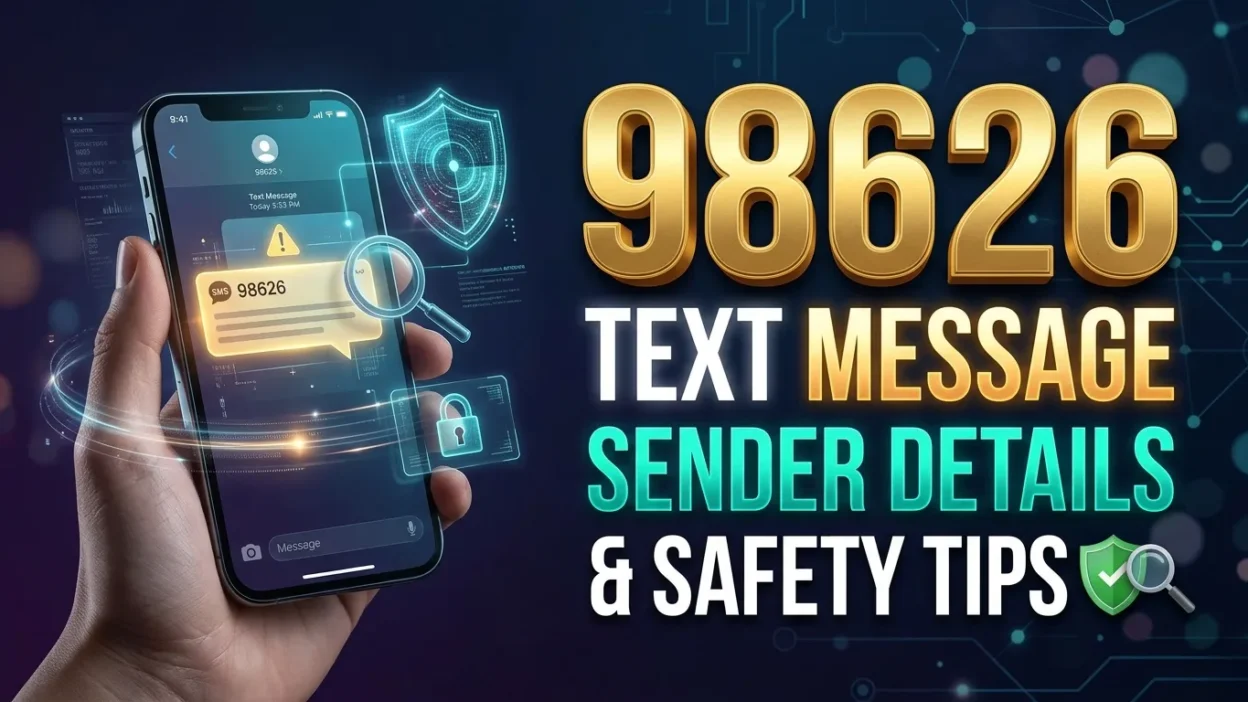
Receiving a text from an unfamiliar short code can leave you wondering who sent it and why it appeared on your phone. If you have received a 98626 text message, you may be trying to identify the sender, understand its purpose, or decide whether it is safe to respond.
Short codes are commonly used by businesses, online services, and automated messaging systems to send verification codes, account alerts, promotional updates, and other notifications. However, the number alone does not confirm who sent a particular message. Its meaning depends on the message’s wording, the service involved, and whether you recently requested a code or update.
Before replying, clicking a link, or sharing personal information, take a moment to review the message carefully. Even a message that looks official can be misleading. This guide explains how to investigate a 98626 text message, recognize warning signs, protect your accounts, and decide what to do next without putting your personal information at risk.
What Is a 98626 Text Message? 📩
A message from 98626 may be associated with an automated texting service, but its exact sender and purpose cannot be confirmed from the number alone. Checking the content and surrounding circumstances is the best starting point.
- It may be a notification connected to a service you use.
- It could contain a verification code or account-related alert.
- It might be an informational or promotional message.
- It could also be an unexpected message that requires further checking.
The most important detail is what the message actually says. If it mentions an account you recognize and matches an action you recently took, that provides useful context. If it asks for sensitive information or directs you to an unfamiliar website, treat it cautiously.
Why Did I Receive a 98626 Text Message? 🔎
There are several possible reasons an unfamiliar short code might appear in your inbox. The following possibilities can help you narrow down what happened without assuming that every message from this number has the same purpose.
- Account verification: You may have requested a one-time password while signing in or creating an account.
- Service notifications: A company may send updates about an order, subscription, appointment, or account activity.
- Marketing messages: Some services use automated texts to share offers or announcements.
- A mistaken number: Someone may have entered your phone number incorrectly when signing up for a service.
- An unexpected or suspicious message: A sender may use a convincing message to encourage you to click a link or disclose private information.
Think about your recent online activity before deciding which explanation fits. If you did not request a verification code, do not share it with anyone. If the text refers to an account you do not recognize, verify the claim through the company’s official website or app rather than using contact details supplied in the message.
Is a 98626 Text Message Legitimate or a Scam? 🛡️
The number itself is not enough to determine whether a message is legitimate. A genuine notification can be unexpected, while a fraudulent text can imitate the wording and appearance of a trusted company.
Look for signs that help distinguish a normal notification from a possible scam.
- Unexpected urgency: The message claims your account will immediately close unless you act.
- Suspicious links: It directs you to an unfamiliar website or a shortened URL.
- Requests for secrets: It asks for your password, payment details, or verification code.
- Unfamiliar account activity: It mentions a purchase, login, or subscription you cannot identify.
- Pressure to respond: It insists that you reply immediately or threatens a penalty.
A professional tone or familiar company name does not prove authenticity. Instead, open the service’s official app or manually enter its known website address. Check your account there to see whether the notification is genuine.
If you cannot verify the sender, avoid clicking links or replying with personal details. Taking a few extra minutes to confirm the source is safer than acting on a message that may be deceptive.
What Should You Do After Receiving a 98626 Text Message? 📱
The safest response depends on whether you recognize the service and understand why it contacted you. You do not need to reply immediately, even if the message sounds urgent.
- Read the message carefully: Check the wording, sender details, and any instructions before taking action.
- Review your recent activity: Consider whether you recently signed in, placed an order, or requested a verification code.
- Verify the sender independently: Visit the official website or app of the company mentioned in the text.
- Avoid unknown links: Do not open links until you have confirmed that the message is genuine.
- Keep sensitive details private: Never share passwords, payment information, or one-time codes with an unverified sender.
- Block suspicious messages: If the text appears fraudulent or unwanted, use your phone’s blocking and reporting options.
If the message concerns an account you do not recognize, you can usually ignore it while checking whether someone accidentally entered your number. However, if it mentions a real account and you suspect unauthorized activity, access that account directly and review its security settings.
How to Check Who Sent a 98626 Text Message 🔍
Identifying the sender requires more than searching for the number. Short codes can be used by messaging providers on behalf of different organizations, so the same number should not automatically be associated with one particular company without reliable confirmation.
Try these practical steps to investigate the message.
- Search the exact number: Look for 98626 alongside a distinctive phrase from the message. Give more weight to reliable sources than anonymous claims.
- Check the message context: A verification code received immediately after a login attempt has a different context from an unexpected payment warning.
- Contact the named organization: Use a phone number or support page found on its official website.
- Review previous messages: Earlier texts from the same conversation may help explain whether the notification relates to a service you use.
- Check official documentation: Some companies publish information about the short codes they use for customer communications.
Be cautious with websites that promise to identify every text sender. Public lookup information may be incomplete, outdated, or inaccurate. If no reliable source confirms the identity of 98626, it is better to leave the sender unidentified than to rely on an unsupported claim.
Should You Reply to a 98626 Text Message? 💬
Whether you should respond depends on the message’s purpose and your confidence in the sender. When the source is unclear, avoid replying until you have verified it.
If the text is a legitimate notification from a service you use, follow the instructions available through that service’s official app or website. You generally do not need to reply to a message simply because it arrived on your phone.
Consider these situations:
- Verification code: Use it only if you initiated the sign-in or account action. Never forward it to another person.
- Promotional offer: Check whether you recognize the company before following any instructions.
- Unexpected payment alert: Review your account directly instead of clicking the supplied link.
- Unknown subscription: Check your carrier or account settings for unfamiliar charges before taking action.
- Suspicious message: Avoid replying, then block or report it through your messaging app when appropriate.
Some legitimate services provide opt-out instructions, such as replying with a designated keyword. Only follow those instructions when you have reasonable confidence that the sender is genuine. For suspicious messages, use your phone’s reporting feature instead of interacting with the sender.
What If You Received a 98626 Verification Code You Did Not Request? 🔐
An unexpected verification code can be confusing, but it does not automatically mean someone has accessed your account. Someone might have entered the wrong phone number, or another person might be attempting to sign in using your details.
The right response is to protect your account without panicking.
- Do not share the code with anyone, even if they claim to be customer support.
- Avoid clicking links included in an unexpected code message.
- Open the relevant service through its official app or website.
- Review recent sign-in activity if the service offers that option.
- Change your password if you discover suspicious activity or believe your credentials have been exposed.
- Enable two-factor authentication when available.
If someone contacts you asking for the code, treat that request as a serious warning sign. Verification codes are intended to prove control of an account or device, and sharing them can allow another person to complete an action in your name.
When the code refers to a service you have never used, you can usually ignore it. If repeated codes arrive unexpectedly, review the security settings of any potentially affected accounts and contact the relevant service through a verified support channel.
How to Block or Report a Suspicious 98626 Text Message 🚫
If you decide that a message is unwanted or suspicious, your phone usually provides tools to reduce further contact. The exact steps vary by device and messaging app.
- On Android: Open the conversation in your messaging app and look for the block or report-spam option in the conversation menu.
- On iPhone: Open the message, check the sender information, and use the available blocking or reporting controls. The options can differ depending on the message type and software version.
- Through your mobile carrier: Check your carrier’s official website for instructions on reporting unwanted or fraudulent texts.
- Through an official reporting service: If you are in the United States, consult the Federal Trade Commission’s official guidance for reporting unwanted texts and scams.
Before deleting a suspicious message, consider keeping a screenshot if it contains evidence of fraud, threats, or unauthorized activity. Avoid forwarding the message to friends or posting personal information from it publicly.
Blocking helps prevent further contact from that sender, while reporting may help the relevant service or carrier investigate suspicious activity. Neither action guarantees that every future message from other numbers will be stopped.
Can a 98626 Text Message Steal Your Personal Information? 🔒
A text message cannot usually access your private information simply because it appears in your inbox. However, interacting with a fraudulent message can put your accounts or personal details at risk.
The danger often comes from what the message encourages you to do. A fake login page, a malicious download, or a request for a verification code can expose information that should remain private.
- Clicking a fake login link: You may accidentally enter your username and password on a fraudulent website.
- Sharing a verification code: Another person could use the code to complete a login or account action.
- Providing payment details: A fake billing notice may attempt to collect your card information.
- Installing an unfamiliar app: An untrusted download may request unnecessary permissions or contain harmful software.
- Responding with private information: Details such as your address or account information could be misused.
If you have only received the message and have not interacted with it, there is generally no need to panic. Simply avoid suspicious links and verify the sender independently.
If you already entered a password or payment details, take action promptly. Change the affected password through the official service, contact your bank if financial information was exposed, and review account activity for anything unusual.
What If You Accidentally Clicked a Link in the Message? ⚠️
Accidentally opening a link does not automatically mean your phone has been compromised. The level of risk depends on what happened after you opened it.
If the page simply opened and you did not enter information, download anything, or approve permissions, the risk may be limited. Close the page and avoid interacting with it further.
If you entered personal details, take these steps:
- Change any exposed password using the official website or app.
- Change the same password on other accounts where you reused it.
- Contact your bank immediately if you provided financial information.
- Review recent account activity and sign out of unfamiliar sessions.
- Remove any suspicious app you installed and review its permissions.
- Run the security checks available on your device if you suspect harmful software.
If you downloaded a file, installed an app, or approved a profile or permission, additional steps may be necessary. Use your device manufacturer’s official security guidance or contact a trusted technical support provider.
Do not trust a second message that claims it can repair the problem through another link. Scammers sometimes use follow-up messages to exploit people who are already worried about their security.
Frequently Asked Questions❓
What is the 98626 text message?
It is a text message associated with the short code 98626, but the specific sender and purpose cannot be confirmed from the number alone. The message content and reliable sender information are needed to identify it.
Is 98626 a scam number?
There is not enough verified information here to label 98626 itself as a scam. Evaluate the message for suspicious links, requests for sensitive details, and claims you cannot confirm independently.
Why did I receive a text from 98626?
Possible explanations include a verification code, an automated notification, a promotional message, or someone entering your number by mistake. Check your recent activity and verify any named service through its official channels.
Should I delete a 98626 text message?
If the message is unwanted or suspicious, you can report or block it and then delete it. Consider saving evidence first if it involves fraud, threats, or unauthorized transactions.
What should I do if I shared a code from 98626?
Open the relevant account through its official app or website, review recent activity, and secure the account immediately. Change your password if necessary, revoke unfamiliar sessions, and contact the service’s official support team.
Conclusion 📱
Receiving a 98626 text message does not automatically mean that your phone or personal information is in danger. The important thing is to understand the message before responding. Short codes can be used for different messaging purposes, and the number alone does not establish the sender’s identity.
Start by reviewing the wording and thinking about whether you recently requested a code, used a service, or expected an account notification. If the message includes a link, urgent warning, or request for private information, verify the claim through an official website or app instead of following the instructions immediately.
You can also block or report suspicious messages through your messaging app or mobile carrier. If you have already shared sensitive details, take steps to secure the affected account and contact your bank if necessary.
A little caution can help you avoid unnecessary stress and protect your digital privacy. When a message seems unfamiliar, verify first, protect your information, and never share a security code with someone you do not trust.

Noah Anderson is a content writer at MessagesfyHub, specializing in heartfelt messages, wishes, quotes, and greetings for every occasion. He is passionate about creating meaningful, easy-to-share content that helps people express their emotions with the right words.