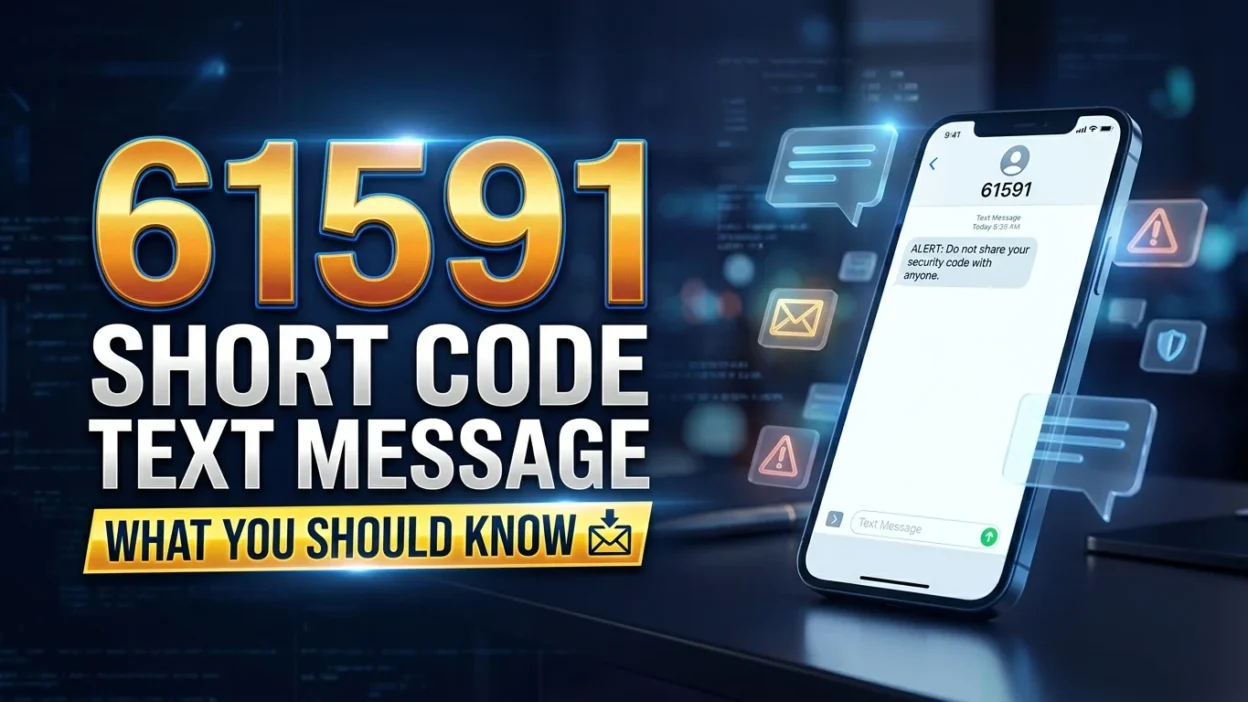
Receiving a text from an unfamiliar number can leave you wondering who sent it and why it appeared on your phone. If you’ve received a 61591 short code text message, you may be trying to identify the sender, understand the message, or determine whether it’s safe to respond.
Short codes are commonly used by businesses and organizations to send automated alerts, verification codes, customer service messages, and surveys. However, seeing a five-digit number doesn’t automatically tell you which company sent the text or whether its contents are trustworthy. Third-party directories list 61591 as a registered short code, but that information alone doesn’t establish its current owner. <Cite refs={[“turn411393search0″,”turn411393search9”]}/>
In this guide, you’ll learn what a message from 61591 might mean, how to investigate its source, and what to do if you don’t recognize it. You’ll also find practical safety tips to help protect your personal information and avoid suspicious links.
What Is the 61591 Short Code Text Message? 📱
A short code is a special, abbreviated number used to send and receive text messages. Businesses often use these numbers to communicate with many customers efficiently.
The 61591 short code has been listed in third-party SMS directories. However, available directory information doesn’t conclusively establish which organization currently operates it or why you received a particular message. <Cite refs={[“turn411393search0″,”turn411393search2”]}/>
Here are some common reasons you might receive a text from a short code:
- 📩 Account notifications: A company may send updates about your account or a recent activity.
- 🔐 Verification codes: Some services use automated messages to confirm sign-ins or account changes.
- 📊 Customer surveys: A business might ask you to rate a recent experience.
- 🛍️ Promotional offers: Retailers may send discounts or information about products.
- 📦 Service updates: Companies may provide order, appointment, or delivery notifications.
- 💬 Customer support: An automated system may send a follow-up after you contact a business.
These are general uses of short codes, not confirmed explanations for every message sent from 61591.
Who Owns Short Code 61591? 🔎
If you’re searching for the owner of 61591, the most important step is to verify the sender using the actual message you received.
Third-party lookup pages can provide clues, but their records may be outdated or incomplete. A listing that identifies a number as a registered short code isn’t sufficient proof of its current ownership. <Cite refs={[“turn411393search0″,”turn411393search9”]}/>
Try these practical steps to identify the sender:
- 🔍 Read the complete text: Look for a company name, service description, or reference to an action you recently took.
- 📱 Check your recent activity: Consider whether you recently contacted customer support, requested a verification code, or made a purchase.
- 🌐 Visit the official website: Open the company’s website independently instead of following an unfamiliar link in the text.
- 🛡️ Check your account: If the message mentions a login or account change, review your account through the official app or website.
- 💬 Look for support information: A legitimate messaging program may provide instructions for HELP or STOP, depending on the service and country.
- ⚠️ Treat unknown senders cautiously: If you cannot establish a connection between the text and a service you use, avoid sharing personal information.
If the message claims to come from a bank, delivery company, or online platform, contact that organization through its independently verified support channel.
Is a Text Message From 61591 Safe? 🔐
A message from a short code can be legitimate, but the number alone cannot guarantee that a text is safe. You should evaluate the message’s contents and verify any important claims before acting.
Watch for these warning signs:
- 🚨 Unexpected verification codes: You receive a login code you never requested.
- 🔗 Suspicious links: The message urges you to open an unfamiliar website.
- 💳 Requests for payment: It demands an unexpected fee or sensitive financial information.
- ⏳ Urgent threats: It claims your account will be suspended unless you act immediately.
- 🔑 Requests for passwords: It asks you to disclose a password, PIN, or one-time security code.
- ❓ Unclear identity: The sender claims to represent a company but provides no verifiable details.
Never share a verification code with someone who contacts you unexpectedly. If you receive an unrequested code, open the relevant service independently and check your account security.
Important: Don’t assume a message is genuine simply because it comes from a short code. Verify the sender before clicking links, responding with sensitive information, or making payments.
What Should You Do After Receiving a 61591 Text? 📩
If you receive a message from 61591 and don’t recognize the sender, there’s no need to panic. Take a moment to review the message and decide whether it matches something you recently did.
- 🔎 Check the context: Look for references to a service or account you actually use.
- 🔐 Verify independently: Contact the named company through its official website or app.
- 🚫 Avoid unknown links: Don’t open links if you cannot verify their destination.
- 🔑 Protect your login details: Never share passwords, PINs, or one-time verification codes.
- 📲 Save relevant details: Keep the message if you may need it for a support inquiry or fraud report.
- 🛑 Report suspicious texts: Use your phone’s spam-reporting feature or your mobile carrier’s reporting process.
If the text appears to be an unsolicited marketing message, check whether it includes legitimate opt-out instructions. Don’t respond with personal details just to find out who sent it.
How to Stop Unwanted Messages From Short Code 61591 🛑
Unwanted texts can become frustrating, especially when you don’t remember signing up for a service. Before blocking the sender, consider whether the message relates to an account or alert you genuinely need.
- 📩 Check for opt-out instructions: Some legitimate messaging services explain how to stop future messages.
- ✋ Use STOP only when appropriate: If the message is from a verified messaging program, follow its stated opt-out instructions. If it appears fraudulent, avoid replying and report it instead.
- 📱 Block the sender: Your phone’s messaging app may offer a blocking option, although blocking behavior can vary for short codes.
- 🚨 Report spam: Use your device’s built-in reporting feature or contact your carrier for guidance.
- 🔒 Review subscriptions: Check whether you recently opted into promotional alerts or text notifications.
- 📞 Contact your carrier: If the messages continue, ask your mobile provider about available filtering and blocking options.
Keep in mind that blocking a number may prevent useful alerts from arriving. Verify the source first if the message could be connected to an important account.
Why Did I Receive a Message From 61591 Without Signing Up? 🤔
There are several possible explanations for an unexpected short-code message, and the number alone cannot establish which one applies.
- 📱 Someone may have entered your phone number by mistake.
- 🔐 A person may have attempted to sign in to an account associated with your number.
- 🛍️ You may have previously opted into a promotion and forgotten about it.
- 📋 A business may be following up on an earlier request.
- ⚠️ The message may be unsolicited or suspicious.
If the message contains a verification code you didn’t request, don’t share it with anyone. Visit the relevant service independently and review its security settings if you can identify the account involved.
If the message threatens you, demands money, or asks for sensitive information, treat it cautiously and verify every claim through an independent channel.
Frequently Asked Questions About 61591 Short Code Text Messages ❓
What company uses short code 61591?
The information available here does not conclusively establish the current owner of 61591. Check the message’s contents and verify any claimed company through its official support channels before trusting it.
Is 61591 a scam number?
The short code alone isn’t enough to determine whether a message is legitimate or fraudulent. Look for suspicious links, unexpected payment requests, urgent threats, and requests for confidential information.
Should I reply to a message from 61591?
Only follow the instructions if you can reasonably verify the sender and understand the purpose of the message. For suspicious texts, avoid replying, opening links, or sharing personal details.
Can I block messages from 61591?
You can check your messaging app for blocking and spam-reporting options. Because short-code handling varies by phone and carrier, contact your provider if blocking doesn’t work.
What if I received a verification code from 61591 unexpectedly?
Don’t share the code. If you can identify the service, open its official app or website independently and review your account activity. If you suspect unauthorized access, change your password and strengthen your account security.
Final Thoughts 📱
Receiving a 61591 short code text message can be confusing when you don’t know who sent it. Although short codes are commonly used for automated business communications, the number by itself doesn’t confirm the identity of the sender or the purpose of the message.
The safest approach is to review the text, look for relevant context, and verify any company or account mentioned through an official channel. Avoid clicking suspicious links, sharing verification codes, or making payments in response to unexpected demands.
If the message is unwanted, you can explore appropriate blocking and reporting options through your phone or mobile carrier. If it contains a verification code you never requested, take a moment to check the security of the relevant account.
Save this guide for future reference, and remember that you don’t need to respond to an unfamiliar message immediately. Verify first, protect your information, and only act when you understand who you’re dealing with. 🔐

Noah Anderson is a content writer at MessagesfyHub, specializing in heartfelt messages, wishes, quotes, and greetings for every occasion. He is passionate about creating meaningful, easy-to-share content that helps people express their emotions with the right words.