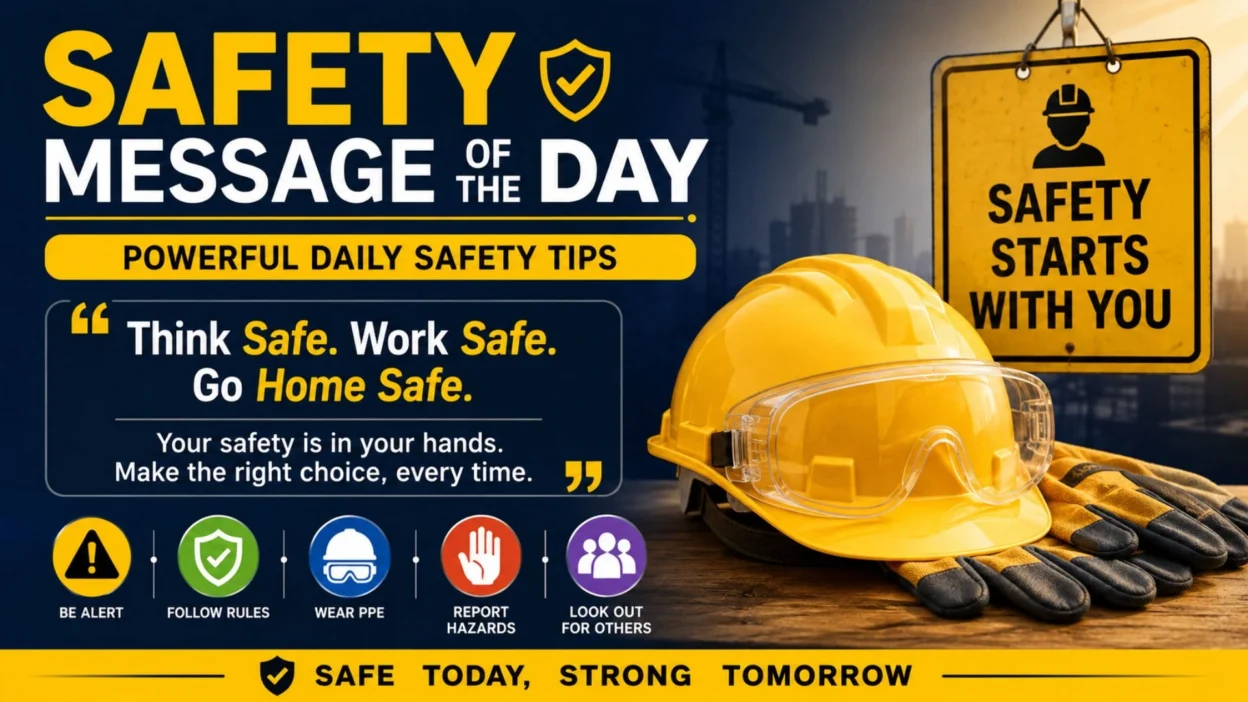
Safety is not something we should think about only after an accident happens. A simple reminder at the right time can encourage someone to slow down, pay attention, use the right equipment, or speak up about a possible hazard. That is why a safety message of the day can make a meaningful difference in workplaces, schools, construction sites, offices, warehouses, and everyday life.
The best safety reminders are short enough to remember but meaningful enough to encourage action. Instead of using the same warning every day, you can choose messages that focus on awareness, teamwork, responsibility, protective equipment, safe decisions, and accident prevention.
Whether you need a quick line for a morning safety meeting, a message for your team chat, or a reminder to display on a notice board, these ideas give you plenty of practical options. Save your favorites and use a fresh message each day to keep safety visible and important.
Top Safety Message of the Day Ideas
Start the day with a simple reminder that encourages everyone to think about safety before beginning their work.
- 🦺 Safety starts with you—make the safe choice before you begin.
- ⚠️ Think before you act, because one careful decision can prevent an accident.
- 👀 Stay alert, spot hazards early, and never ignore a safety concern.
- 🛡️ Work safely today so you can return home safely tonight.
- 🚧 Never rush a task when slowing down can keep you safe.
- 💡 A moment of awareness can prevent a lifetime of regret.
- 🤝 Safety is everyone’s responsibility, so look out for yourself and your teammates.
- 👷 Follow safe procedures even when no one is watching.
- 🔎 See something unsafe? Speak up before someone gets hurt.
- 🧠 Use your experience, follow the rules, and think about the risks before starting.
- 🦺 The right protective equipment is part of the job, not an optional extra.
- 🚨 Never assume a hazard is harmless simply because nothing has happened yet.
- 💪 Strong workers do not take unnecessary risks; they make smart choices.
- 🌟 Make safety your daily habit, not an afterthought.
- 🚦 Stop, think, and check before you move forward.
- 🏠 Your most important destination is home. Work safely to get there.
- ❤️ Protect yourself today because the people who love you are waiting at home.
- 🔐 Keep safety procedures close, follow them carefully, and encourage others to do the same.
- 🌱 Every safe action today helps build a safer workplace tomorrow.
- 👀 Pay attention to your surroundings because hazards can appear when you least expect them.
Short Safety Message of the Day
Short reminders are perfect for morning briefings, text messages, team chats, posters, and daily announcements.
- 🦺 Safety first, every task, every time.
- ⚠️ Stay alert and stay safe.
- 👀 Look before you act.
- 🛡️ Safe work is smart work.
- 🚧 Never rush safety.
- 💡 Think safe, work safe.
- 🤝 Safety begins with teamwork.
- 👷 Protect yourself and your team.
- 🚨 Report hazards before they become accidents.
- ❤️ Work safely, go home safely.
- 🔎 Spot it. Fix it. Prevent it.
- 🧠 Think before you take a risk.
- 🦺 Wear the protection your job requires.
- 🚦 Stop, check, and proceed safely.
- 💪 Make safety part of every task.
- 🏠 The goal is always to get home safely.
- 🌟 Good safety habits create great workplaces.
- ⚠️ Never ignore a warning sign.
- 👀 Stay focused on the task.
- 🛡️ Prevention is better than recovery.
- 🤝 Look out for one another.
- 🚧 A shortcut is never worth an injury.
- 💡 Safety is a choice you make every day.
- ❤️ Your safety matters.
- 👷 Do the job right and do it safely.
Workplace Safety Message of the Day
Workplace reminders can help employees stay focused on hazards, procedures, communication, and responsible decisions throughout the day.
- 🦺 A safe workplace begins when every employee takes responsibility for their own actions.
- 👀 Before starting your task, take a moment to identify what could go wrong and how you can prevent it.
- ⚠️ Never walk past a hazard and assume someone else will handle it.
- 🤝 Good teamwork includes protecting one another from unnecessary risks.
- 🧠 If you are unsure how to perform a task safely, stop and ask for guidance.
- 🚧 Keep work areas clean and organized because clutter can quickly become a hazard.
- 🛡️ Use tools and equipment only as intended, and never bypass a safety procedure to save time.
- 👷 A productive day means little if someone gets injured along the way. Make safety part of the plan.
- 🔎 Check your equipment before use and report anything damaged or unsafe.
- 🚨 Communication can prevent accidents. Speak clearly, listen carefully, and confirm important instructions.
- 🦺 Wear the appropriate personal protective equipment whenever the task requires it.
- ⚠️ Never let familiarity make you careless. Even routine tasks deserve your full attention.
- 💡 Take responsibility for safety even when the task seems simple.
- 👀 Stay aware of people, vehicles, equipment, and changing conditions around you.
- ❤️ Every employee deserves to finish the workday in the same condition they arrived.
- 🤝 A strong safety culture grows when people remind, support, and respect one another.
- 🚦 If conditions change, stop and reassess the task before continuing.
- 🧠 Experience helps you recognize risks, but it should never encourage overconfidence.
- 🛡️ Follow established procedures because they exist to reduce preventable risks.
- 🌟 Make today another day when everyone works carefully and goes home safely.
Daily Safety Message for Employees
These messages are useful for managers, supervisors, team leaders, and coworkers who want to encourage safe habits without sounding overly formal.
- 👷 Your skills help you do the job, but safe decisions help you finish it without unnecessary risk.
- 🦺 Start every shift with a safety mindset and carry it through until the work is complete.
- 👀 Stay focused, especially when performing familiar tasks that can tempt you to become careless.
- ⚠️ If something feels unsafe, do not ignore that feeling. Stop and address the concern.
- 🤝 Your actions can affect everyone around you, so make choices that protect the entire team.
- 🧠 Never be embarrassed to ask a safety question. Getting clarification can prevent a serious mistake.
- 🚧 Keep pathways clear and work areas organized so everyone can move safely.
- 🛡️ Inspect your equipment before using it and never knowingly work with something unsafe.
- ❤️ Remember why safety matters: your family, friends, coworkers, and future are worth protecting.
- 🔎 Look for hazards before they become problems, not after an incident occurs.
- 🚨 Report unsafe conditions promptly so they can be addressed before someone is injured.
- 💡 A few extra seconds spent checking your surroundings can save much more time later.
- 🦺 Follow the required safety practices even when you are busy or under pressure.
- 👀 Distractions can turn an easy task into a dangerous one. Stay present and focused.
- 🌟 Every employee can contribute to a safer workplace through responsible daily choices.
- 🤝 Safety improves when everyone feels comfortable speaking up and listening to concerns.
- 🚦 Never let deadlines pressure you into taking an unnecessary risk.
- 🧠 Plan the task, understand the hazards, and choose the safest way to complete the work.
- ❤️ Protect your health and safety today so tomorrow remains yours to enjoy.
- 🏠 The workday is successful when everyone finishes the job and returns home safely.
One-Line Safety Message of the Day
One-line reminders are easy to remember and work well on safety boards, presentations, emails, and daily announcements.
- 🦺 Safety is a daily choice, so choose wisely.
- ⚠️ Stop rushing and start thinking safely.
- 👀 Awareness is your first line of protection.
- 🛡️ Protect yourself before you begin the task.
- 🚧 Safe habits prevent avoidable accidents.
- 🤝 A safer team starts with responsible individuals.
- 🧠 Think about the risk before taking the action.
- ❤️ Someone is waiting for you to come home safely.
- 🔎 Find the hazard before the hazard finds you.
- 👷 Professional workers never compromise on safety.
- 🚨 Speak up when you see something unsafe.
- 💡 Smart workers plan for safety before they start.
- 🦺 The safest shortcut is no shortcut.
- 👀 Stay alert because conditions can change quickly.
- 🛡️ Proper protection makes a difference.
- 🚦 Stop, think, check, and then act.
- 🤝 Safety becomes stronger when we work together.
- ⚠️ Never trade safety for speed.
- 🌟 Make every task a safe task.
- 🏠 Work safely today and return home safely tonight.
- ❤️ Your safety is worth more than saving a few minutes.
- 🧠 Think twice before taking a needless risk.
- 🚧 Keep your workplace safe for everyone.
- 👀 Pay attention to what is happening around you.
- 🦺 Good preparation makes safer work possible.
Safety Message of the Day for Morning Meetings
A morning safety message can set the tone before the team begins its tasks. Keep it positive, practical, and connected to the work ahead.
- 🌅 Start the day with a clear mind, a safety check, and a commitment to work responsibly.
- 🦺 Before the first task begins, make sure you understand the hazards and know how to work safely.
- 👀 Take a quick look around your work area this morning. A small hazard noticed early can prevent a bigger problem later.
- 🤝 Let’s make safety part of our teamwork today. If you see a risk, help your coworker address it.
- ⚠️ Today’s goal is not simply to finish the work. It is to finish it safely and correctly.
- 🧠 Before using any equipment this morning, make sure it is suitable, inspected, and ready for safe operation.
- 🚧 Begin the shift by keeping your workspace organized and your pathways clear.
- 🛡️ Take responsibility for the protective equipment you need before starting your work.
- ❤️ Remember that every person here has someone who cares about them. Let that thought guide your choices today.
- 🌟 Let’s make today a day of careful decisions, clear communication, and zero unnecessary risks.
Safety Message of the Day About Awareness
Awareness helps people recognize changing conditions and make better decisions before a hazard becomes an accident.
- 👀 Stay aware of your surroundings, especially when working near moving equipment or other people.
- 🧠 Do not work on autopilot. Pay attention to what you are doing from beginning to end.
- 🔎 Look beyond the task itself and notice what is happening around you.
- ⚠️ A familiar workplace can still contain unfamiliar hazards, so never let routine reduce your attention.
- 🚨 If something changes, pause and reassess before continuing.
- 🦺 Keep your eyes, ears, and mind focused on the task.
- 💡 Awareness means noticing risks before they become emergencies.
- 👷 Do not assume that someone else has checked the hazard. Take responsibility for your own safety.
- 🤝 Stay aware of your teammates because your actions can affect their safety too.
- ❤️ A few seconds of attention can protect you and the people around you.
- 🔎 Look twice when conditions are busy, crowded, or changing.
- 🛡️ Good awareness turns potential hazards into opportunities for prevention.
- 🚦 Slow down when visibility, conditions, or circumstances make the task less predictable.
- 🧠 Ask yourself what could go wrong before beginning a new or unfamiliar task.
- 🌟 Make awareness your habit, not something you remember only after an incident.
Safety Message of the Day About Responsibility
Safety improves when people understand that their decisions matter. These messages encourage personal responsibility without blaming anyone.
- 🦺 Safety is not only a rule from management; it is a responsibility shared by everyone.
- 🤝 Take care of yourself, and help create an environment where others can work safely too.
- 🧠 Your choices matter, even when a task seems routine.
- ⚠️ Never leave a known hazard for someone else to discover.
- 👀 If you notice something unsafe, take the appropriate steps to have it addressed.
- 🛡️ Protecting yourself is part of being responsible to your coworkers and loved ones.
- 🚧 Follow safe procedures because responsible work means doing the job correctly.
- ❤️ Taking safety seriously is one of the simplest ways to show that you value your life and the lives around you.
- 🌟 Be the person who makes the safe choice, even when the unsafe choice looks easier.
- 🔎 Responsibility means recognizing risks and taking reasonable action to control them.
- 👷 A responsible worker does not wait for an accident before taking safety seriously.
- 💡 Lead by example because your safe behavior may encourage someone else to make a better choice.
- 🚨 Report hazards honestly and promptly so they can be addressed.
- 🤝 Encourage your teammates when they make safe choices and speak respectfully when you see a concern.
- 🦺 Take ownership of your safety from the first task to the last.
Safety Message of the Day About Personal Protective Equipment
Protective equipment can add an important layer of protection when a task creates specific hazards. These reminders encourage people to use the protection required for their work.
- 🦺 Wear the required protective equipment before starting the task, not after a problem occurs.
- 🛡️ The right protection is part of doing the job properly.
- 👷 Check your protective equipment before use and replace damaged items when necessary.
- 👀 Make sure your safety gear fits properly and does not interfere with your work.
- ⚠️ Never remove required protective equipment simply because the task looks easy.
- 🦺 Your equipment cannot protect you if you choose not to use it correctly.
- 💡 Make checking your protective equipment part of your daily routine.
- 🚧 Different tasks create different hazards, so use protection appropriate for the work.
- 🛡️ Treat protective equipment as essential work gear, not an inconvenience.
- ❤️ A few seconds spent putting on proper protection can make a meaningful difference.
- 👷 Keep required safety equipment clean, maintained, and ready for use.
- ⚠️ If your protective equipment is damaged or unsuitable, report the issue before continuing.
- 🦺 Protect your eyes, hands, head, hearing, and other areas according to the hazards you face.
- 🧠 Know why your protective equipment is required and use it as intended.
- 🌟 Good safety habits begin before the work starts.
Safety Message of the Day About Slips, Trips, and Falls
Simple housekeeping habits can help reduce everyday hazards. These messages are useful for offices, warehouses, workshops, stores, and other work environments.
- 🚧 Keep walkways clear because an unexpected obstacle can quickly become a serious hazard.
- 👀 Watch where you are walking, especially in busy or changing work areas.
- 🧹 Clean up spills promptly and follow the proper procedure for reporting them.
- ⚠️ Never leave tools, boxes, cords, or other objects where people need to walk.
- 👷 Use designated walkways and avoid taking unsafe shortcuts.
- 🦺 Wear appropriate footwear for the conditions and type of work.
- 🚦 Slow down when floors are wet, uneven, crowded, or otherwise difficult to navigate.
- 🔎 Report damaged flooring, loose surfaces, or other walking hazards as soon as possible.
- 🧠 Do not carry a load that blocks your view while walking.
- 🛡️ Good housekeeping is an important part of workplace safety.
- 👀 Keep your eyes on your path instead of walking while distracted.
- 🚧 Store materials safely so they do not create obstacles or fall into walking areas.
- ⚠️ A clean work area is not just more comfortable; it can also help reduce preventable incidents.
- 🧹 Take a few moments to organize your workspace before leaving it.
- ❤️ Small housekeeping habits can help protect everyone who uses the same space.
Safety Message of the Day About Fire Safety
Fire safety requires preparation, awareness, and responsible behavior. These reminders can help keep emergency awareness fresh without creating unnecessary fear.
- 🔥 Know the fire safety procedures for your workplace before an emergency occurs.
- 🚨 Keep emergency exits accessible and never use them as storage areas.
- 🧯 Know where appropriate fire safety equipment is located and understand the procedures for your workplace.
- 👀 Never ignore signs of smoke, burning smells, or other potential fire hazards.
- ⚠️ Keep combustible materials away from heat sources when required by your safety procedures.
- 🚪 Make sure emergency routes remain clear and easy to access.
- 🧠 Learn your workplace’s emergency plan and know where you are expected to go.
- 🔥 Never treat a small fire or unusual smell as something to ignore.
- 🚨 Report damaged or missing emergency equipment promptly.
- 🛡️ Preparation is one of the most valuable parts of emergency safety.
- 👷 Follow your organization’s fire safety rules every day, not only during drills.
- 🔎 Pay attention during safety training because emergency knowledge is easier to use when you have practiced it.
- ❤️ Knowing what to do during an emergency can help you respond more calmly and responsibly.
- 🌟 Take fire safety seriously because preparation matters when every second counts.
- 🚧 Keep emergency access points clear for everyone.
Safety Message of the Day About Safe Driving
Driving safety matters whenever employees operate vehicles, travel for work, or commute between locations. These reminders encourage patience, focus, and responsible choices.
- 🚗 Put safety before speed whenever you are behind the wheel.
- 📵 Keep your attention on driving and avoid distractions.
- 🛑 Follow traffic rules even when you are running late.
- 👀 Check your surroundings carefully before moving the vehicle.
- 🚦 Respect speed limits and adjust your driving to the conditions.
- 🧠 Never allow pressure to finish quickly to influence an unsafe driving decision.
- 🦺 Make sure everyone uses the required restraints before the journey begins.
- 🌧️ Give yourself extra time when weather or road conditions make driving more difficult.
- 🚗 Maintain a safe following distance so you have more time to respond.
- 📱 A message can wait; arriving safely cannot.
- 🛡️ Inspect the vehicle as required and report problems before using it.
- 🚨 Never drive when you are not in a condition to drive safely.
- 👀 Stay alert around pedestrians, cyclists, other vehicles, and changing road conditions.
- ❤️ Someone may be waiting for you to arrive home, so drive with care.
- 🌟 The best journey is the one that ends safely.
Safety Message of the Day About Communication
Clear communication helps teams understand hazards, instructions, changing conditions, and responsibilities. A few good words can prevent confusion before it becomes a problem.
- 🗣️ Speak clearly when communicating important safety information.
- 👂 Listen carefully when someone raises a safety concern.
- 🤝 Good communication is one of the strongest tools a safety-conscious team can have.
- ⚠️ Never assume everyone understands the plan; confirm important instructions when needed.
- 📢 Report hazards through the appropriate workplace channels.
- 🧠 Ask questions whenever an instruction or procedure is unclear.
- 👀 Make sure the person receiving important information has understood it.
- 🛡️ Share relevant safety information before beginning work that involves changing conditions.
- 🚨 Communicate emergencies quickly and follow the established response procedure.
- 👷 Encourage respectful conversations about safety rather than ignoring concerns.
- 💡 Speaking up early can help prevent a small concern from becoming a bigger problem.
- 🤝 Keep your team informed when conditions change.
- ❤️ Listening to a coworker’s concern shows that safety matters to everyone.
- 🌟 A team that communicates well can make safer decisions together.
- 🗣️ Never stay silent about a serious safety concern simply because you are afraid of slowing the work down.
Safety Message of the Day About Tools and Equipment
Tools and equipment should be used responsibly and according to the procedures established for the specific task. These reminders encourage inspection, proper use, and attention.
- 🔧 Use the correct tool for the job rather than creating an unsafe workaround.
- 👀 Inspect tools and equipment before use according to workplace procedures.
- ⚠️ Do not use equipment that appears damaged or unsafe.
- 🛠️ Follow the manufacturer’s instructions and workplace safety procedures for equipment.
- 🧠 Make sure you understand how equipment should be operated before using it.
- 🦺 Use required protective equipment when working with tools or machinery.
- 🚧 Keep equipment areas organized so tools do not create additional hazards.
- 🔎 Report defects promptly instead of hoping they will not cause a problem.
- 👷 Never use a tool for a purpose it was not designed to perform.
- 🛡️ Proper maintenance supports safer and more reliable equipment use.
- ⚠️ Never bypass a safety feature simply to make a task faster.
- 🧠 If you are not trained or authorized to use specific equipment, follow your workplace rules and seek appropriate guidance.
- 🔧 Store tools properly after use so they are ready and safe for the next task.
- 👀 Keep your attention on moving parts and other hazards associated with equipment.
- 🌟 Safe equipment use begins with preparation and ends with proper shutdown and storage.
Safety Message of the Day About Avoiding Shortcuts
Shortcuts can sometimes look efficient, especially when people are under pressure. However, skipping an important safety step can create unnecessary risk.
- ⚠️ A shortcut may save minutes, but a safe procedure can protect much more.
- 🧠 Never skip a safety step simply because you have done the task many times.
- 🦺 Follow the established procedure even when you are trying to finish quickly.
- 🚧 If the safe method takes longer, take the time.
- 👀 Think about the consequences before choosing the quickest option.
- 💡 Efficiency should never require unnecessary risk.
- 🛡️ Safe work means completing the task correctly, not merely completing it quickly.
- 👷 Experienced workers know that confidence should never replace safe procedures.
- ❤️ No deadline is more important than protecting people from preventable harm.
- 🚦 When you feel pressured to rush, pause and make a safe plan.
- ⚠️ Never remove a protective measure just to make a task easier.
- 🤝 Encourage your coworkers to choose safe methods even when work gets busy.
- 🧠 Ask yourself whether the shortcut is truly worth the risk before taking it.
- 🌟 The smartest way to save time is to avoid mistakes, incidents, and preventable delays.
- 🦺 Do the job right, and make safety part of doing it right.
Safety Message of the Day About Teamwork
A safe workplace depends on people looking beyond their own tasks. These messages encourage cooperation, respect, and shared responsibility.
- 🤝 Safety becomes stronger when everyone looks out for one another.
- ❤️ Your coworker’s safety matters just as much as your own.
- 👀 If you notice someone facing a hazard, respond appropriately instead of ignoring it.
- 🦺 Encourage safe behavior through respect, not criticism.
- 🧠 Share useful safety information with your team when conditions change.
- 🤝 Good teamwork means communicating before a risk affects someone else.
- ⚠️ Never create a hazard for another person through careless actions.
- 👷 Help build a workplace where people feel comfortable raising safety concerns.
- 🛡️ A strong team does not compete over who can work fastest; it works responsibly together.
- 💡 One person’s careful decision can protect an entire team.
- 🚧 Respect shared workspaces and keep them safe for everyone.
- 👀 Stay aware of how your task could affect people working nearby.
- ❤️ Look after your teammates because everyone deserves to finish the day safely.
- 🌟 Safety is a team achievement built through many responsible choices.
- 🤝 When everyone participates, safety becomes part of the workplace culture.
Safety Message of the Day for Construction Workers
Construction environments can involve changing conditions, equipment, heights, vehicles, tools, and many other hazards. Daily reminders should reinforce careful planning and adherence to site procedures.
- 🦺 Start every shift by understanding the hazards connected to your work area and assigned tasks.
- 🚧 Follow site-specific safety rules and required procedures throughout the day.
- 👷 Use the protective equipment required for the hazards present at your worksite.
- ⚠️ Never assume a construction area is safe simply because you have worked there before.
- 👀 Stay aware of equipment, vehicles, materials, coworkers, and changing site conditions.
- 🧠 Plan your task before starting and consider how conditions could change.
- 🚨 Report hazards promptly so they can be addressed through the proper process.
- 🛠️ Use tools and equipment only when you are trained and authorized to do so.
- 🦺 Check required protective systems before beginning work where they apply.
- 🚧 Keep access routes and work areas organized according to site requirements.
- 👷 Never let a tight deadline encourage you to ignore a required safety procedure.
- 🤝 Communicate with coworkers when working around shared hazards or changing conditions.
- 👀 Stay especially alert when people and equipment are operating in the same area.
- 🛡️ Follow established procedures for elevated work, excavation, machinery, electrical hazards, and other site-specific risks.
- ❤️ The most important part of completing a project is making sure everyone gets home safely.
Safety Message of the Day for Office Workers
Office safety can be easy to overlook because the environment may feel familiar. Simple reminders can encourage better awareness of everyday workplace conditions.
- 💻 Keep your workspace organized so cables, bags, and other items do not create trip hazards.
- 🪑 Adjust your workstation according to your organization’s ergonomic guidance.
- 👀 Take appropriate breaks from prolonged screen work and change position when needed.
- 🚶 Keep walkways and emergency exits clear.
- ⚠️ Report damaged electrical equipment or other workplace hazards through the proper process.
- 🔌 Avoid unsafe use of electrical outlets, cords, or equipment.
- 🧠 Stay aware when walking through busy office areas instead of focusing only on your phone or screen.
- 🚪 Know your workplace’s emergency procedures and evacuation routes.
- 🦺 Follow all safety requirements that apply to your office environment.
- 🤝 Keep shared spaces safe and considerate for everyone.
- 💡 A comfortable office can still contain hazards, so awareness should never disappear.
- 🧹 Clean up spills or report them promptly to prevent someone from slipping.
- 📦 Store heavy or bulky items safely according to workplace guidance.
- ❤️ Small safety habits can make the office healthier and more comfortable for everyone.
- 🌟 Safety belongs in every workplace, including the office.
Safety Message of the Day About Mental Focus
Being mentally present can help people recognize hazards and make thoughtful decisions. These reminders encourage workers to pause when they are distracted, tired, or uncertain.
- 🧠 A distracted mind can miss an obvious hazard, so stay focused on the task.
- 👀 Give important tasks your full attention instead of working on autopilot.
- ⚠️ If you are feeling unusually tired or distracted, follow your workplace procedures for handling the situation safely.
- 🛑 When your attention is not where it needs to be, pause and reset before continuing.
- 💡 Clear thinking is an important part of safe decision-making.
- 🧠 Do not let stress or pressure push you into careless choices.
- 👀 Before beginning a demanding task, make sure you understand what you need to do.
- 🤝 Speak with the appropriate person if you need clarification or support to perform a task safely.
- 🦺 Stay focused when working around equipment, vehicles, tools, or other hazards.
- ❤️ Taking a moment to regain focus can be better than making a rushed decision.
- 🌟 A calm and attentive approach can help you recognize risks earlier.
- 🚦 Slow down when you notice that you are becoming distracted.
- 🛡️ Good safety starts with being mentally present as well as physically prepared.
- ⚠️ Never let routine convince you that you can stop paying attention.
- 🧠 Think clearly, act carefully, and keep safety at the front of your mind.
Safety Message of the Day for Remote Workers
Working from home or another remote location still requires good safety habits. A comfortable environment should not make you forget basic awareness.
- 💻 Keep your work area organized and free from unnecessary trip hazards.
- 🪑 Set up your workstation comfortably and follow recommended ergonomic practices.
- 🔌 Check that electrical cords and equipment are in good condition before use.
- 👀 Take regular breaks from prolonged screen work and change your position when appropriate.
- 🧠 Keep your workspace free from distractions when handling important tasks.
- 🚪 Make sure you know what to do if an emergency occurs while working remotely.
- ⚠️ Do not ignore hazards simply because you are working outside a traditional office.
- 💡 Good safety habits matter whether you work at a desk, in an office, or from home.
- ❤️ Take care of your surroundings because your well-being matters wherever you work.
- 🌟 Create a workspace that supports both productivity and safe daily habits.
Safety Message of the Day for Students
Students can develop strong safety habits by learning to notice hazards, follow instructions, and look after one another.
- 🎒 Stay aware of your surroundings when walking through hallways, classrooms, and outdoor areas.
- 👀 Follow school safety instructions even when the situation seems routine.
- 🚶 Walk carefully instead of rushing through crowded areas.
- ⚠️ Report unsafe conditions to a teacher, staff member, or responsible adult.
- 🤝 Look out for classmates and encourage safe behavior.
- 🧠 Listen carefully when teachers explain emergency procedures.
- 🚪 Know the appropriate exits and follow instructions during drills or emergencies.
- 🛡️ Use classroom equipment only as instructed.
- 🧹 Keep shared spaces clean and free from objects that could cause someone to trip.
- 💡 Safety is a habit that becomes more valuable as you practice it every day.
Safety Message of the Day for Managers and Leaders
Leaders can influence workplace culture through their own actions. A daily safety reminder works best when it is supported by responsible behavior.
- 👔 Lead by example because employees notice what leaders do, not only what they say.
- 🦺 Make safety part of planning rather than treating it as a final step.
- 🤝 Encourage employees to raise concerns without fear of being ignored.
- 👀 Pay attention to recurring hazards and address them through the appropriate process.
- 🧠 Ask your team what safety challenges they encounter during their work.
- ⚠️ Never encourage employees to compromise safety to meet an unnecessary deadline.
- 📢 Communicate important changes clearly and make sure employees understand them.
- 🛡️ Provide appropriate training, equipment, and procedures for the work being performed.
- 💡 Recognize employees who contribute positively to a safe workplace.
- ❤️ Remember that every safety decision affects real people and their families.
- 🌟 A strong safety culture begins when leadership makes safety visible every day.
- 🤝 Listen to workers because they often notice practical hazards close to the task.
- 🚧 Review workplace conditions regularly and take appropriate action when risks are identified.
- 👷 Encourage employees to stop and seek guidance when they are uncertain about a task.
- 🧠 Make safety conversations practical, respectful, and focused on prevention.
Safety Message of the Day for Toolbox Talks
A toolbox talk can provide a short opportunity to discuss one relevant safety topic before work begins. Keep the message focused and connected to the day’s activities.
- 🦺 Before starting work, identify the hazards that are most relevant to today’s tasks.
- 👀 Look at changing conditions instead of relying only on yesterday’s plan.
- ⚠️ Discuss what could go wrong and what controls are available before beginning.
- 🤝 Make sure everyone understands their responsibilities before the task starts.
- 🧠 Ask questions if any part of the work plan is unclear.
- 🚧 Review the work area and identify hazards that may affect the team.
- 🛡️ Confirm that required protective equipment and other controls are ready.
- 📢 Communicate changes promptly when conditions differ from the original plan.
- 👷 Learn from previous incidents and near misses without turning the conversation into blame.
- 💡 A short safety discussion can help the team approach the day’s work with greater awareness.
- ❤️ Remember that the goal is not simply completing the task but completing it responsibly.
- 🌟 Start the toolbox talk with one practical reminder that workers can apply immediately.
Safety Message of the Day About Emergency Preparedness
Preparation can make emergency situations easier to manage. These reminders encourage people to understand procedures before they need them.
- 🚨 Know your workplace emergency procedures before an emergency happens.
- 🧠 Learn where you are expected to go during an evacuation or other emergency response.
- 🚪 Keep emergency routes accessible and follow site-specific instructions.
- 📢 Pay attention to alarms, announcements, and directions from designated personnel.
- 🦺 Participate seriously in required emergency drills and training.
- 🔎 Know how to report an emergency through the appropriate workplace channel.
- ⚠️ Never block emergency equipment or access points with materials or personal belongings.
- 🤝 Stay calm and follow established procedures instead of creating confusion.
- 🛡️ Preparation is easier before an emergency than during one.
- 👀 Know the hazards that are specific to your workplace or environment.
- ❤️ Your knowledge may help you respond more responsibly when something unexpected happens.
- 🌟 A prepared workplace is better positioned to respond when conditions change quickly.
- 🚨 Review emergency information regularly so important details remain familiar.
- 🧠 If you are unsure about an emergency procedure, ask the appropriate person for clarification.
- 🤝 Help create a workplace where everyone understands the importance of emergency readiness.
Safety Message of the Day for New Employees
New employees may need time to become familiar with procedures, equipment, people, and workplace hazards. Encouraging questions can help them build safe habits from the beginning.
- 👷 Never hesitate to ask questions when you are unsure how to perform a task safely.
- 🦺 Learn the safety procedures that apply to your role before beginning unfamiliar work.
- 👀 Take time to understand your surroundings instead of assuming everything works the way it did at your previous job.
- 🧠 Ask for proper instruction before operating unfamiliar equipment.
- ⚠️ Do not feel pressured to pretend you understand something when you need clarification.
- 🤝 Your coworkers can help you learn safe workplace habits when you communicate openly.
- 🔎 Pay attention during orientation and safety training because the information may guide your daily work.
- 🛡️ Use the protective equipment required for your tasks.
- 🚧 Follow established procedures even when someone suggests a faster alternative.
- ❤️ Speaking up about safety is a sign of responsibility, not weakness.
- 💡 Take your time while learning a new task and focus on doing it correctly.
- 🌟 Building safe habits from your first day can benefit you throughout your career.
Safety Message of the Day for Experienced Workers
Experience is valuable, but familiarity should never become an excuse to overlook hazards or skip procedures.
- 👷 Experience makes you knowledgeable, but safe habits keep that knowledge useful.
- 🧠 Never allow routine to replace attention.
- ⚠️ A task you have completed many times can still contain hazards.
- 🦺 Continue following required procedures even when the work feels familiar.
- 👀 Stay alert to changes in equipment, people, weather, materials, and surroundings.
- 🤝 Share useful knowledge with newer coworkers while encouraging safe practices.
- 💡 Experience should help you recognize risks earlier, not encourage unnecessary confidence.
- 🛡️ Keep your safety standards consistent on easy days and difficult ones.
- 🚧 Never assume yesterday’s safe conditions will remain the same today.
- ❤️ Your experience can help protect both yourself and the people working around you.
- 🌟 The best experienced workers show others that safety never becomes optional.
Safety Message of the Day for Seasonal Hazards
Weather and seasonal conditions can change the risks people face at work and during travel. Adapt your safety practices to the conditions around you.
- ☀️ Hot conditions can increase physical strain, so follow your workplace guidance for working safely in heat.
- 🌧️ Wet conditions can change walking and driving risks, so slow down and stay alert.
- ❄️ Cold or icy conditions may require additional precautions and attention to changing surfaces.
- 🌬️ Strong winds can affect outdoor work, equipment, and materials, so follow site-specific precautions.
- 👀 Check changing weather conditions before beginning outdoor tasks.
- ⚠️ Do not let familiar seasonal conditions make you careless.
- 🦺 Use the equipment and protective measures appropriate for the conditions.
- 🚗 Allow additional travel time when weather makes roads or visibility more challenging.
- 🧠 Adjust your work plan when environmental conditions change.
- 🤝 Communicate weather-related hazards to the appropriate people.
Best Safety Messages for Captions
These short messages work well for safety posters, social posts, team updates, internal newsletters, and daily workplace captions.
- 🦺 Safety today, confidence tomorrow.
- 👀 Stay alert. Stay prepared. Stay safe.
- ⚠️ Think first, act safely.
- 🤝 Safety is stronger when we practice it together.
- 🛡️ Protect what matters most.
- 🚧 No task is worth an unnecessary risk.
- 🧠 Smart choices create safer days.
- ❤️ Work safely because someone is waiting for you.
- 👷 Safe workers build stronger workplaces.
- 🔎 Notice the hazard before it becomes an incident.
- 🚦 Slow down when safety requires it.
- 💡 Prevention starts with awareness.
- 🦺 Make safety part of your routine.
- 🤝 Look out for your team.
- 🏠 Work safely. Go home safely.
- 🌟 Every safe choice counts.
- ⚠️ Never let speed replace good judgment.
- 👀 Stay focused on what matters.
- 🛡️ Safety is always worth the extra effort.
- ❤️ Your safety matters every single day.
Copy-Paste Ready Safety Message of the Day
If you need a complete daily reminder without writing one yourself, these messages are ready to share with employees, coworkers, students, or teams.
- 🦺 Today’s safety reminder: Take a moment before starting your work to identify potential hazards, check your equipment, and make sure you understand the safest way to complete the task. A little preparation can make a big difference. Stay alert and work safely.
- 👀 Safety message of the day: Do not let routine make you careless. Even familiar tasks deserve your full attention. Look around, follow the required procedures, communicate with your team, and address hazards through the proper process.
- ❤️ Today, remember why safety matters: Your workday has a purpose, but getting home safely matters even more. Make careful decisions, avoid unnecessary risks, and look out for the people working beside you.
- 🤝 Daily safety reminder: Safety is a shared responsibility. If you notice a hazard, take the appropriate action and communicate the concern. When everyone contributes, the entire team benefits.
- 🧠 Safety message for today: Think before you act. Understand the task, recognize the hazards, use the required controls, and ask for guidance when something is unclear. Safe work starts with thoughtful decisions.
- 🚧 Today’s reminder: Never allow a deadline or busy schedule to convince you that safety procedures are optional. Take the time to perform your work responsibly and encourage others to do the same.
- 🛡️ Stay safe today: Use the protective equipment required for your task, inspect equipment as appropriate, and keep your work area organized. Small safety habits can help prevent bigger problems.
- 🌟 Start today safely: Be alert, communicate clearly, follow established procedures, and take responsibility for your actions. A successful day is one where the work gets done and everyone returns home safely.
How to Use a Safety Message of the Day Effectively
A daily safety message works best when people can connect it to something they actually encounter. Instead of sharing a random quote every morning, choose a reminder that matches the day’s tasks, environment, or seasonal conditions.
- 🦺 Keep it relevant: Choose a message related to the work being performed that day.
- 👀 Keep it visible: Share reminders through appropriate team communication channels, meetings, posters, or notice boards.
- 🧠 Keep it practical: Encourage a specific safe behavior rather than using vague warnings.
- 🤝 Keep it conversational: Give employees an opportunity to raise concerns or ask questions.
- 🔎 Keep it fresh: Rotate topics such as awareness, housekeeping, equipment, communication, emergency preparedness, and safe driving.
- 🌟 Keep it positive: Focus on prevention, responsibility, and the benefits of making safe choices.
- ⚠️ Keep it accurate: Follow your organization’s safety policies, training, and applicable requirements rather than relying on a general message alone.
A daily message should support your existing safety program, not replace formal training, risk assessments, procedures, or professional guidance.
FAQ About Safety Message of the Day
What is a safety message of the day?
A safety message of the day is a short reminder shared daily to encourage awareness, responsible behavior, and safer decisions. It can focus on a specific workplace hazard, safe habit, or general safety principle.
What is a good safety message for today?
A useful daily message is: “Think before you act, identify the hazards, follow the required procedures, and choose the safest way to complete the task.” It is simple enough to remember while encouraging practical action.
How can I use a safety message at work?
You can share a safety message during a morning meeting, toolbox talk, team briefing, internal chat, email, safety board, or other appropriate workplace communication. Choose a message that relates to the work and conditions of the day.
Why are daily safety messages important?
Daily reminders can keep safety visible and encourage people to think about hazards before starting their work. They work best when combined with appropriate training, procedures, supervision, and hazard controls.
What makes a safety message effective?
An effective message is short, clear, relevant, and actionable. It should encourage a safe behavior or reinforce an important principle without creating unnecessary fear or confusion.
Conclusion
A good safety message of the day does more than fill a space on a notice board or start a morning meeting. It gives people a brief opportunity to pause, look around, and think about how their choices can affect themselves and others. Whether the reminder focuses on protective equipment, housekeeping, communication, driving, teamwork, emergency preparedness, or simply staying alert, the goal remains the same: encourage responsible action before a preventable problem occurs.
The most powerful safety reminders are often the simplest ones. “Slow down,” “speak up,” “check first,” and “go home safely” may sound like small phrases, but repeated consistently, they can help keep safety part of everyday thinking. Choose messages that fit your workplace, connect them to real tasks, and support them with proper procedures and training.
Save these ideas and return whenever you need a fresh daily reminder. Make each message count, because every safe choice today can help create a safer tomorrow.

Noah Anderson is a content writer at MessagesfyHub, specializing in heartfelt messages, wishes, quotes, and greetings for every occasion. He is passionate about creating meaningful, easy-to-share content that helps people express their emotions with the right words.